top of page

About MycoPerch
MycoPerch investigates how surviving “perch trees” facilitate the post-fire recolonization of soil mycorrhizal fungi and how this process influences soil functioning and vegetation recovery in Mediterranean forests. As wildfire severity increases under climate change, understanding belowground recovery mechanisms becomes essential for sustainable forest management.
Our hypothesis
Living perch trees act as biological legacies and reservoirs of mycorrhizal inoculum. From these surviving trees, fungal communities may recolonize surrounding burned soils, restoring soil multifunctionality and supporting vegetation recovery.

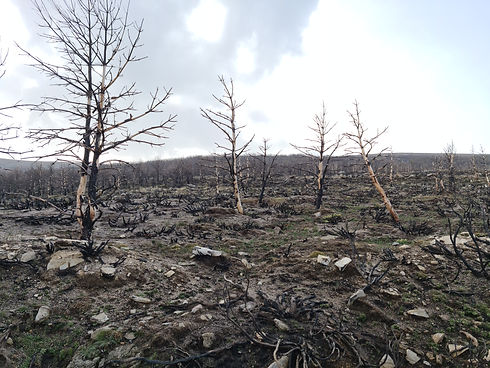
The ecological challenge
High-severity wildfires can drastically reduce soil microbial communities, including mycorrhizal fungi that are essential for plant nutrition and seedling establishment. The loss of these symbiotic networks may hinder forest regeneration and alter long-term ecosystem functioning.
Study design


Why it matters
Understanding post-fire mycorrhizal dynamics will:
-
Improve forest management strategies
-
Inform post-fire restoration policies
-
Contribute to nature-based climate adaptation
bottom of page